Archive for the ‘Guests’ category

Be Green and Save

April 18th, 2011
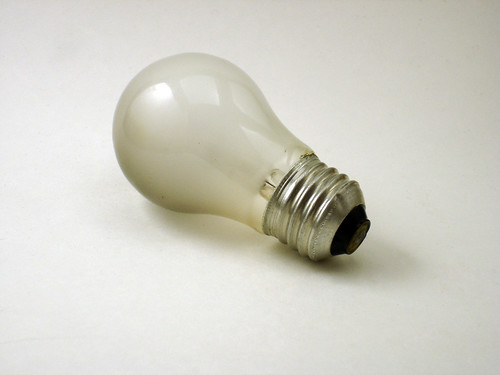
Lightbulb

Getting Green Ideas to Save Money


Be Green and Save
Let’s face it, saving money can sometimes be a chore, it can take a lot of effort and some serious willpower. However, if you make some small adjustments to your general lifestyle and some small alterations around the home, you can save some money by being green. Here are some tips to get you started:


Can you live without a car?It’s said that the average annual cost of owning a car is around $8,000, which includes the cost of insurance, payments, fuel and any maintenance costs. If you can live without a car then you can instantly save a lot of money and it’s a great benefit to the environment. If you must have a car for general use then you could consider buying a car that is more fuel-efficient than your current vehicle, it will help to save you money in fuel and maintenance costs.

Be clever around the home.
Try to be clever and frugal when dealing with things around the home. I read a stat that recently said around 25% of electricity, heating and hot water is wasted in an average home. Try adjusting your boiler temperature to save some money, and only put the heating on if you think you really need it.

Also make sure your home is energy efficient, make sure your windows and any cracks around the home are properly sealed to keep heat within your home. It has been said that by conducting some simple energy audits around the home can save you 10% on heating costs.

Consider some lifestyle changes.
There are many small lifestyle changes that can make a huge difference. Do you drive to your workplace? Have you considered cycling instead? You can save your weekly fuel costs and help the environment at the same time. Also, do you purchase your meals in work every day? Consider taking a packed lunch with you to save some extra cash.

Keeping on the subject of food, according to a book called “The Cheapskate Next Door“, a typical US family spends around $4,000 on meals outside of the home a year and you can save 75% of this simply by eating more at home by buying fresh produce. Eating at home can also be healthier than eating out as you know exactly what ingredients you’ve used.

Switch to energy efficient lighting – If you haven’t already…
We use our lights so much when we’re at home that they can account for up to 15% of our home energy bills. To save some money and do your bit for the environment switch out the old style light bulb for those that carry the energy efficient label, they can save you a huge 75% on your annual lighting bill.


Remember that when trying to save money you should make your savings work for you. As I’m based in the UK, I use a cash-ISA savings account (read more here) for my savings as the interest you earn is tax free, see what equivalent accounts you have wherever you’re based and reap the rewards.

FICO 101

March 3rd, 2011

Do you know what your FICO credit score is?

Are you asking, “What is a credit score”?

Well, you had better get with the times if you don’t! Credit scores are used for everything from mortgages, loans, auto insurance, ordering utilities, buying cell phone service, renting an apartment, and even applying for a job, so here is a crash course – FICO 101.

Your credit score can be clinically defined as “a numerical expression, based on a statistical analysis of a person’s credit files,” used as tool “to represent the creditworthiness of person.” (So says Wikipedia.) The three major credits bureau each have their own formula for computing the scores, and they use competing scoring systems.

Your current creditors use this score to determine whether to increase your credit line – or charge you a higher interest rate. New lenders use this score to determine whether to approve a car loan or a mortgage loan and, if approved, what interest rate to charge, and the amount for which you should be approved. The higher the number, the better you look to lenders. People with the highest scores get the lowest interest rates.

MR: Mine use to be over 800, but I haven’t check in the last few years.

Just what goes into calculating the score? Everything in your credit report, with different kinds of information carrying differing weights, says Fair Isaac Corp. (FICO) Public Affairs Manager Craig Watts. The FICO scoring model looks at more than 20 factors in five categories.

1. Paying your bills (35% of the score) The most important factor is how you’ve paid your bills in the past, placing the most emphasis on recent activity. Paying all of your bills on time is good. Paying them late, on a consistent basis, is bad. Having accounts that were sent to collections is worse. Declaring bankruptcy is worst.

2. Amount of money you owe and the amount of available credit (30%)
The second most important area is your outstanding debt – how much money you owe on credit cards, car loans, mortgages, home equity lines, etc. The total amount of credit you have available is also considered. Statistics have shown that people who have a lot of available credit tend to use it, which makes them a less attractive credit risk.

“Carrying a lot of debt doesn’t necessarily mean you’ll have a lower score,” Watts says. “It doesn’t hurt as much as carrying close to the maximum. People who consistently max out their balances are perceived as riskier. People with the highest scores use credit sparingly and keep their balances low.”

3. Length of credit history (15%)
The third factor is the length of your credit history. The longer you’ve had credit, especially with the same credit issuers, the more points you get.

4. Mix of credit (10%)
The best scores will have a mix of both revolving credit (such as credit cards) and installment credit (such as mortgages and car loans). “Statistically, consumers with a richer variety of experiences are better credit risks,” Watts says. “They know how to handle money.”

5. New credit applications (10%)
The final category is your interest in new credit and how often you are applying. The model compensates for people who are “shopping” for the best mortgage or car loan rates. The only time shopping really hurts your score, Watts says, is when you have recent credit stumbles, such as late payments, or bills sent to collections.

What doesn’t count in a score

The scoring model doesn’t look at things such as age, race, gender, job or length of employment, income, education, marital status, length of time at your current address, whether you rent or own, and other information not contained in your credit report.
With that being said…these variables may not be factors in determining your FICO credit score, but lenders may consider all of those factors when deciding whether to approve a loan application.

Credit scores are not perfect

The major drawback to credit scoring is that it relies on information in your credit report, which is quite likely to contain errors. Checking your credit report annually can help alleviate some inevitable mistakes. If you plan to buy a house or a car, look at your credit report at least six months beforehand, to correct any mistakes on your report that may lower your credit score.

Recently enacted laws enable you to obtain a free credit report annually from each of the three bureaus. However, these days, it may be beneficial to belong to a service that enables you to check your credit report and FICO scores at any time. Not all creditors report data to all bureaus, or report it correctly. You have no control over which bureau a new creditor will use to determine whether to offer you more credit. Many services allow you to see your comparative reports with the scores.

In addition, with new credit requirements imposed after the bank bailouts and credit card reforms, banks are quicker to take actions that can lower your score. For example, they may lower your credit limit. This impacts your debt-to-credit ratio, and makes it seem like you are using more of your limit. They are also requiring higher score to get the best rates. More careful monitoring is necessary to keep up with this.

You have the right to know your FICO credit score at any time. Keep up with it, since this score is more important in your everyday life than you may realize!

This guest post was brought to you by CareOne Credit – they are a debt consolidation advisor. Check them out for any questions you may have on your credit!”?

ALWAYS READ THE SMALL PRINT

November 26th, 2010

ALWAYS READ THE SMALL PRINT

Article provided by MoneySupermarket.com

Small print is one of those things that we should all read before we commit to buy a product or service. Without reading the small print, how do you know what you are committed to purchasing? Now I’m going to be honest and say, I never used to read the small print on anything until just a few years ago, when I took out a credit card and I didn’t read about the excessive charges for payment protection. Now, I admit that this was in fact my fault for not reading the small print, so I thought I’d list a few products or services where I think reading the small print is incredibly important.

Insurance

Whether you are buying home or auto insurance, you should always read the small print. When it comes to specific insurance policies, they tend to come hand in hand with add-ons or extras that can bump up the cost of your insurance considerably. Also, important things to include when checking your insurance small print are things like exit fees (if you want to back out of the contract) and things that you can do to actually invalidate your insurance (just in case!).

Flights

When buying flights online I’ve found that not one site is the same as another. They all operate using different layouts and they have their own way of selling the flights to you. For example, I always get confused when I go to booking a flight with regards to what extras I get, does the flight come with an in-flight meal? What are the extra baggage charges? Sometimes these small details are kept in the small print so make sure you look carefully.

Employment Contract

When starting a new job, I always meticulously check my contract of employment. The things that are normally included in the small print, are things like, whether or not you get paid for sick days in the first 6 months of employment, or how many days holiday you are entitled to. Sometimes these things are detailed clearly on contracts and other times they are quite difficult to spot.

Cell Phone Contract

When purchasing a cell phone contract there can be some hidden charges that you’ll need to be aware of, things like cell phone insurance can be enclosed in the small print. Also, make sure you check out what the charges are on your cell contract for when you venture outside of your monthly calling or messaging allowance, the prices can be pretty steep.

Financial products

Possibly the most important thing to read the small print on are financial products. Whether you’re taking out a new loan or credit card, taking out any type of financial product is a massive commitment, so you need to ensure you read all of the small print carefully.

An example of this could be, you’ve just taken out a ‘balance transfer credit card’, as there’s a 0% interest rate on balance transfers for 12 months, however the product doesn’t clearly state what the interest rate will be on new purchases during that period, so make sure you read the contract carefully to find out. Financial products normally come with a long term commitment and they can be the most damaging if you don’t read the small print.

What other products or services do you think you should always read the small print on?

-MR

pfblogs.org logo

Disclaimer: This site is for informational and entertainment purposes only, and the content herein should not be mistaken for professional financial advice. It is highly recommended that you seek advice from a professional for serious financial matters. This site and its author may be compensated for expressing personal opinions regarding featured products and services.